The Indian Board of Implantology (IBI) is an autonomous certifying body under the auspices of the Indian Association of Oral Implantology (IAOI). It aims to uphold the highest standards in the practice and education of oral implantology in India. The IBI shall work towards certifying professionals who demonstrate exceptional expertise, knowledge, and ethical practices in oral implantology.
To establish a globally recognized certification body that promotes excellence in oral implantology and contributes to improving patient care standards through evidence-based practices.
1. Fellow of the Indian Board of Implantology (FIBI)
2. Diplomate of Indian Board of Implantology (Diplomate – IBI)
Eligibility Criteria:
Examination Process:
Fees:
Eligibility Criteria:
Examination Process:
Fees:
The IBI will provide CPD points for members who participate in recognized implantology workshops, seminars, and conferences.
ADVISORY BOARD
DR. Padmanabha Thallam
ADVISORY BOARD
DR. Veerabahu M
ADVISORY BOARD
DR. Arunachalam
EX OFFICIO MEMBER & PRESIDENT IAOI
Dr. Shivshankar M
CHAIRMAN
Dr. U Arunmozhi
VICE CHAIRMAN
Dr. Egammai Sethuraman
VICE CHAIRMAN
Dr. Arun Ramachandran
DIRECTOR
Dr. Sabarinathan
CONVENOR
Dr.Johnson Raja James
MEMBERS
Dr. VIJAY.V.K
MEMBERS
Dr. N. Gopichander
MEMBERS
Dr. Sankalp Mittal
MEMBERS
Dr.Arunachalam Muthukumarasamy
MEMBERS
Dr. Prisly Thomas
MEMBERS
Dr. Thangavelu
MEMBERS
Dr John Nesan
MEMBERS
Dr Segin Chandran
MEMBERS
Dr. Venkat Nag
Fellowship examination in Implantology conducted by the Indian Association of Oral Implantology (IAOI) aims to assess and certify the competency of dental professionals in the field of dental implants. The examination will evaluate clinical expertise, knowledge, and the ability to manage implant-related procedures effectively and safely.
To be eligible for the Fellowship Examination in Implantology, candidates must meet the following requirements:
Qualifications:
The candidate must be a registered dentist with a valid license to practice in India (BDS, MDS, or equivalent).
Training and experience requirements:
Proof of participation in at least 30 hours of continuing education (CE) related to implantology during the past 2 years with IAOI. This could include courses, seminars, workshops, or webinars conducted by IAOI or recognized implantology bodies.
The Fellowship Examination will be conducted in two stages:
The Case Review and Clinical Assessment is designed to test the candidate’s theoretical knowledge of implantology. It will include the following sections:
The clinical assessment will evaluate the candidate’s practical ability to handle implant cases, both in theoretical knowledge and clinical application.
1. Case presentation: (40 marks)
2. Oral Viva: (20 marks)
3. Assessment criteria:
Passing Criteria: Successful demonstration of clinical skills and knowledge with a minimum score of 60% in the clinical assessment. (60/100 marks).
Upon successful completion of the clinical assessments, candidates will be awarded the Fellowship in Implantology by the Indian Board of Implantology (IBI) under the auspices of the Indian Association of Oral Implantologists (IAOI). This certification will be valid for 2 years, after which the candidate must renew their fellowship by fulfilling the Continuing Education requirements set by the IAOI.
Candidates must adhere to the following ethical guidelines during the examination process:
these guidelines, candidates can demonstrate their readiness for advanced practice in implantology.
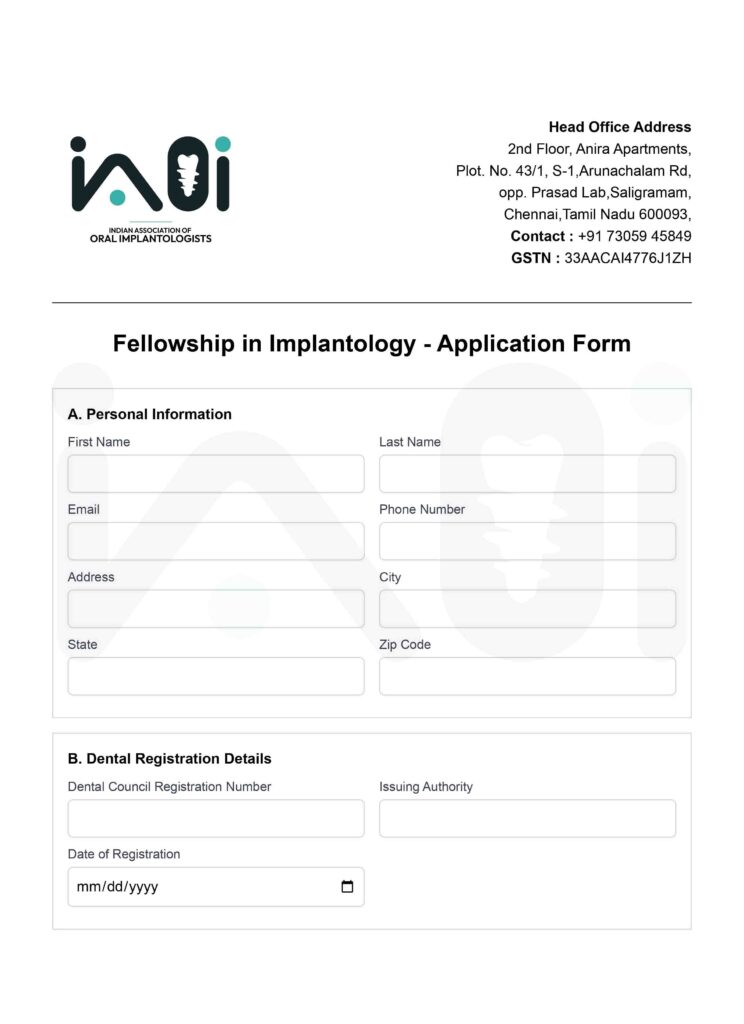
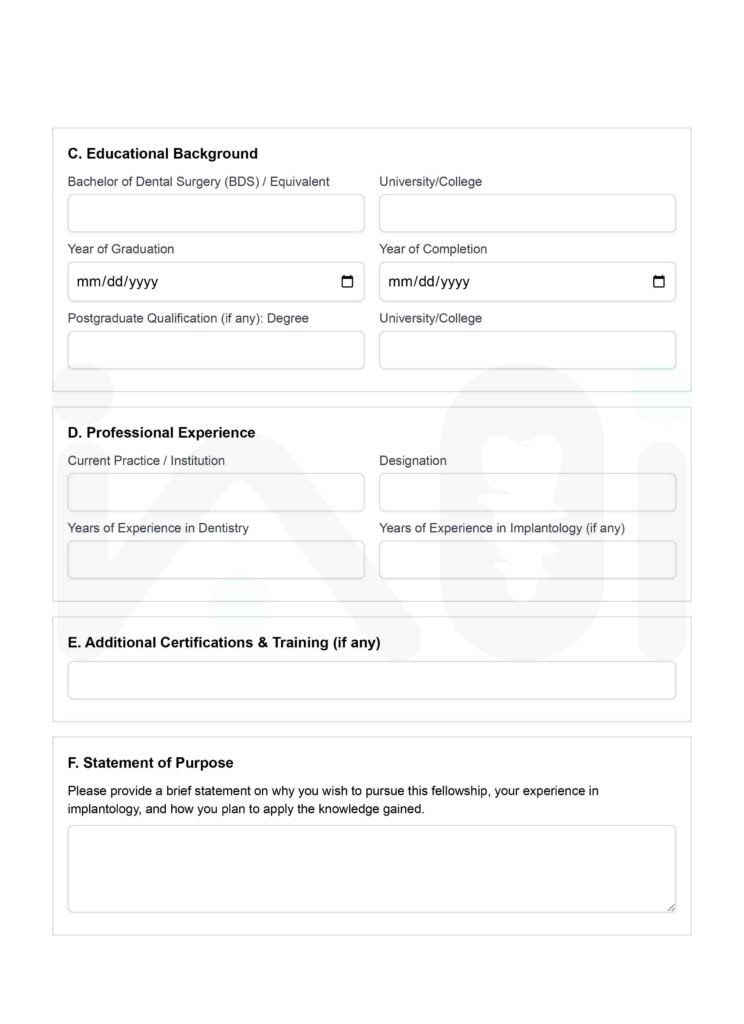
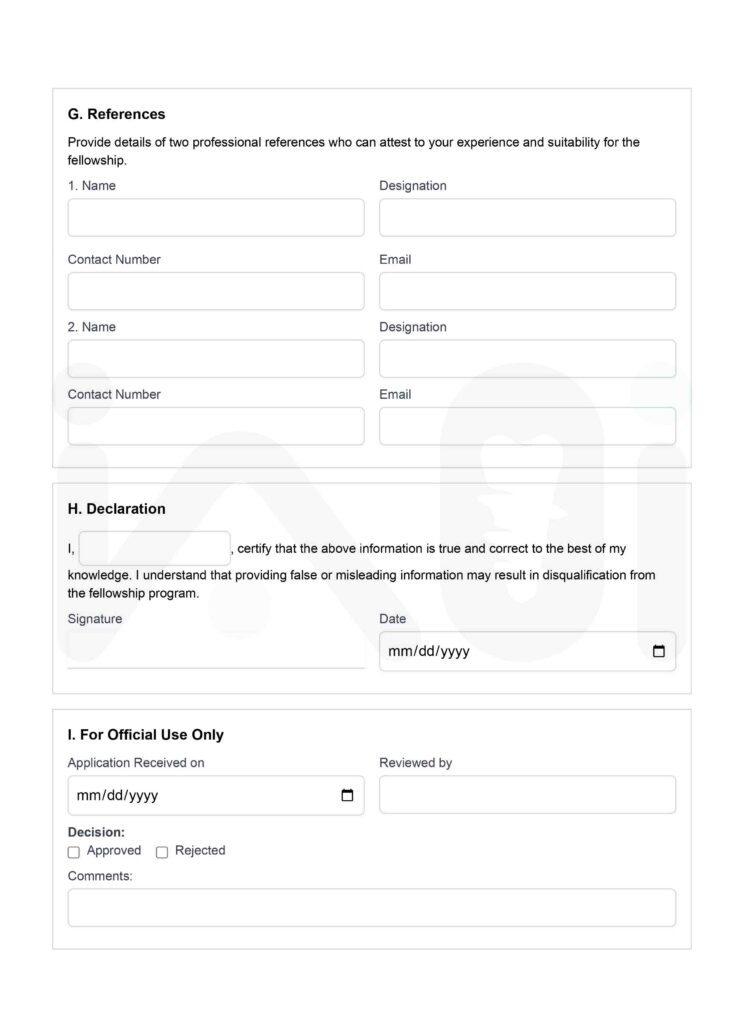
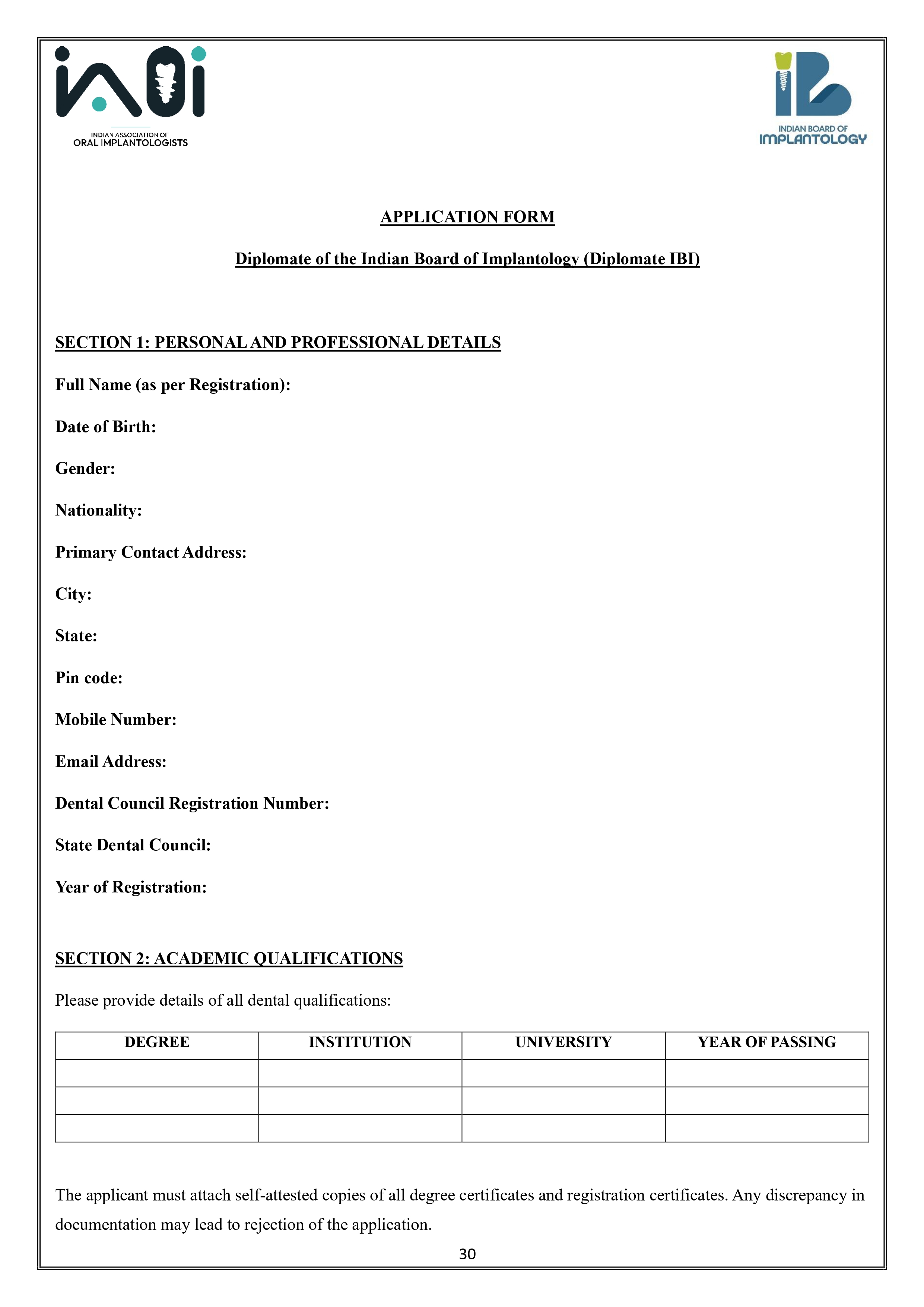
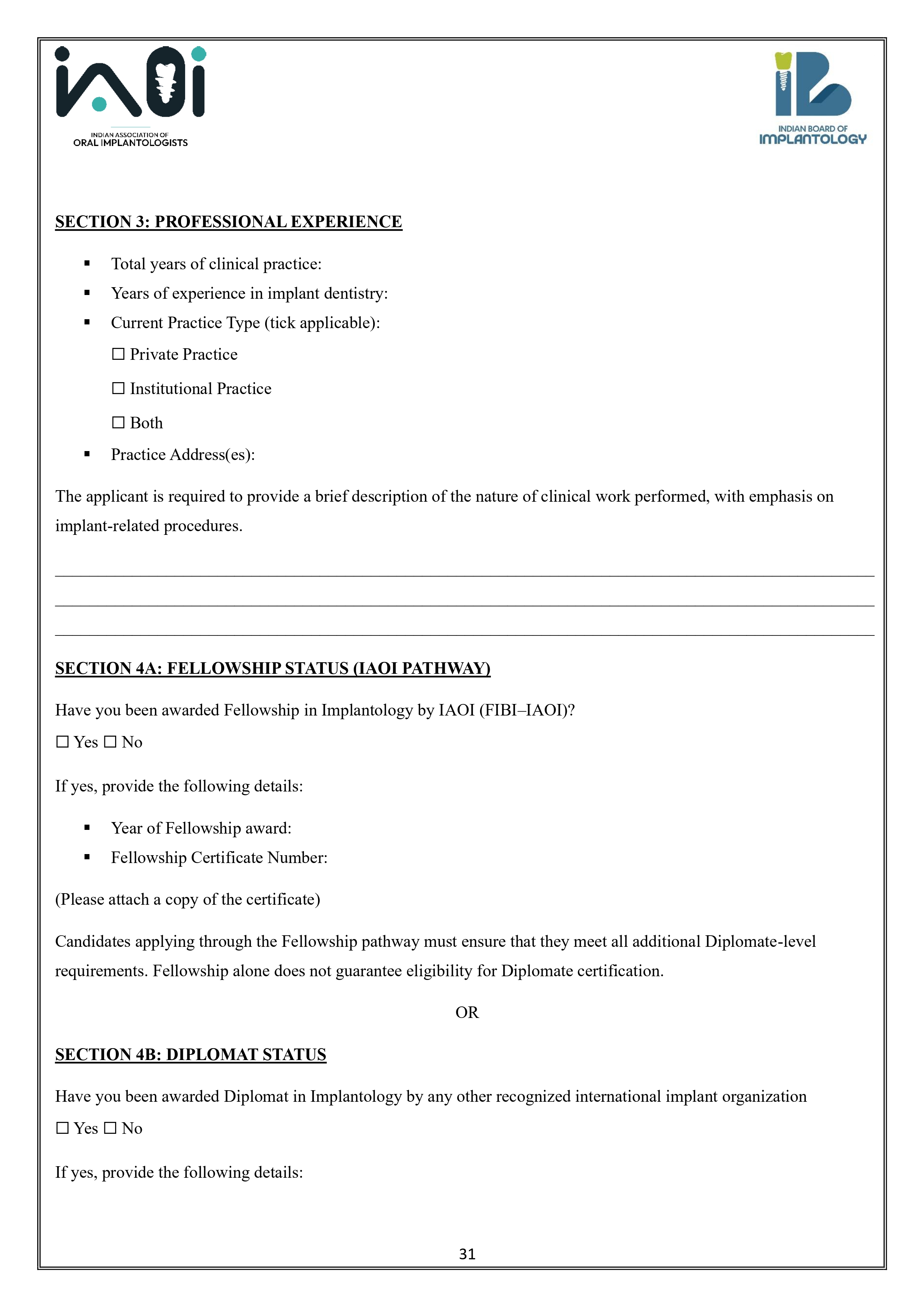
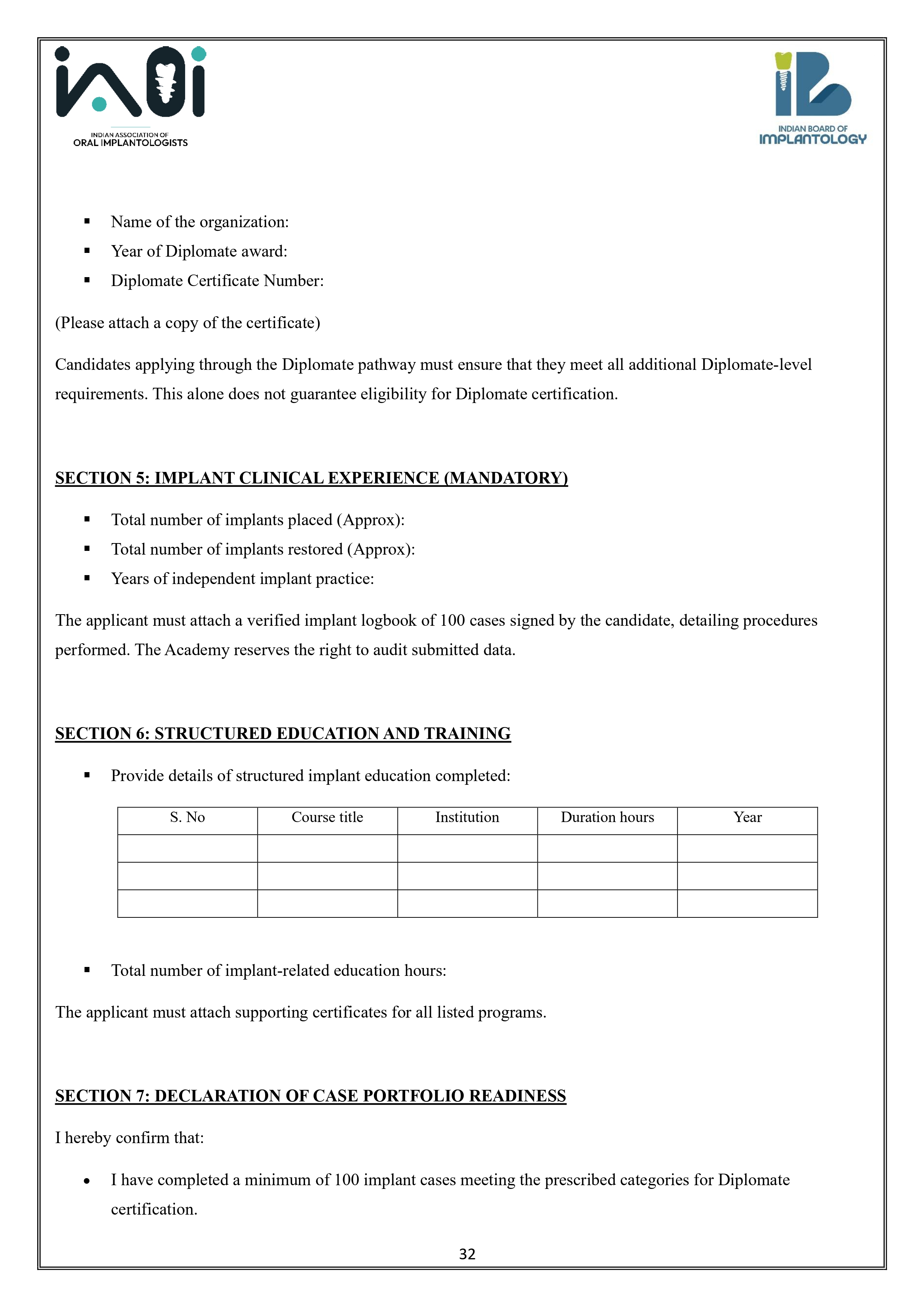
Please provide all necessary details and documents for your fellowship application.
0%
Uploading large files... Please do not close this window. This may take a few minutes.
The document defines the policy governing the award of the title “Diplomate of the Indian Board of Implantology (Diplomat IBI)”, conferred by the Indian Board of Implantology under the aegis of the Indian Association of Oral Implantology. The Diplomate certification represents the highest level of professional recognition awarded by the Association in the field of implant dentistry and is intended to signify advanced clinical competence, independent decision-making ability, and excellence in patient care.
The purpose of this certification is to establish a structured, competency-based credential that reflects excellence in implant dentistry within the Indian context while maintaining equivalence with internationally accepted standards. The certification is designed to evaluate a clinician’s ability to integrate scientific knowledge with clinical expertise in delivering predictable and ethical implant care.
The primary objectives of the Diplomate program are to ensure that certified candidates demonstrate the ability to independently diagnose, plan, execute, and maintain implant treatments across a wide range of clinical scenarios. The program also aims to promote evidence-based practice, encourage critical thinking, and ensure transparency in clinical outcomes. Additionally, it seeks to create a nationally recognized benchmark that enhances the credibility and global acceptance of implant dentistry training in India.
The certification is open to registered dental practitioners who are actively engaged in implant dentistry. It applies to both general practitioners and specialists, including those trained in prosthodontics, periodontics, and oral and maxillofacial surgery. The certification framework does not differentiate candidates based on specialty background but evaluates implant dentistry as an integrated discipline encompassing both surgical and prosthetic competencies. The policy shall apply to all candidates, examiners, and administrative bodies involved in the certification process and shall govern all aspects of eligibility, assessment, certification, and recertification.
The Diplomate certification is founded on the principles of competency, objectivity, transparency, and ethical responsibility. The process is designed to ensure that certification is awarded based on demonstrated clinical ability rather than participation in educational programs alone. Emphasis is placed on real-world clinical outcomes, sound decision-making, and the ability to manage complications. All assessments are conducted using standardized criteria and are subject to independent evaluation by qualified examiners. Measures such as anonymized case review, multi-examiner assessment, and structured scoring systems are implemented to minimize bias and maintain the integrity of the certification process.
To be eligible for the Diplomate certification, the applicant must possess a recognized Bachelor of Dental Surgery (BDS) degree or an equivalent qualification recognized by the appropriate regulatory authority. While a postgraduate degree (MDS) is desirable, it is not mandatory, provided the candidate demonstrates adequate clinical experience and competence in implant dentistry.
The applicant must have a minimum of five years of clinical experience following graduation, of which at least three years must involve active practice in implant dentistry. This requirement ensures that candidates have developed sufficient clinical maturity and exposure to a variety of treatment scenarios. Candidates must demonstrate substantial clinical experience, including the placement of a minimum of 100 dental implants and the restoration of at least 50 implant-supported prostheses. These requirements are intended to ensure that applicants possess meaningful hands-on experience and are not reliant solely on observational or assisted training.
In addition to direct eligibility, candidates who have been awarded Fellowship in Implantology by the Indian Association of Oral Implantology (FIAOI) shall be eligible to apply for Diplomate certification, provided they fulfill all additional requirements specified for Diplomate-level assessment. Fellowship shall be recognized as a preparatory stage within the structured progression framework of the Academy and shall not be considered equivalent to Diplomate certification. Candidates who have received Diplomate in Implantology from other associations of international repute can also apply (Acceptance is purely the discretion of the Board).
Candidates must have completed adequate structured education in implant dentistry. This training must include both theoretical and practical components and should cover essential areas such as implant biology, surgical techniques, prosthetic rehabilitation, digital workflows, biomaterials, and complication management.
For candidates holding Fellowship from the Indian Association of Oral Implantology, the educational hours completed during Fellowship may be considered toward this requirement. However, such candidates must demonstrate continued advanced training and clinical exposure beyond Fellowship, reflecting progression from supervised learning to independent practice. All training activities must be documented and are subject to verification by the examination committee.
The Indian Board of Implantology adopts a tiered certification framework to promote progressive skill development and maintain clear differentiation between levels of competency. The pathway consists of Fellowship (Fellow IBI) and Diplomate (Diplomate IBI) certification.
Fellowship certification represents foundational competency achieved through structured training and guided clinical exposure. Diplomate certification represents advanced clinical mastery characterized by independent execution, comprehensive treatment planning, and the ability to manage complex cases and complications.
Progression from Fellowship to Diplomate is based on demonstrated competence, clinical experience, and successful completion of all Diplomate assessment requirements. Advancement is not automatic and requires independent validation through the certification process.
The certification process is conducted in three sequential stages: a written examination, a case portfolio evaluation, and an oral examination. Each stage is designed to assess a specific domain of competence.
The written examination evaluates the candidate’s theoretical knowledge and its application to clinical scenarios. The case portfolio provides direct evidence of clinical performance, including treatment planning, execution, and outcomes. The oral examination assesses clinical reasoning, decision-making ability, and the capacity to manage complex or unforeseen situations. Candidates must successfully complete each stage before progressing to the next.
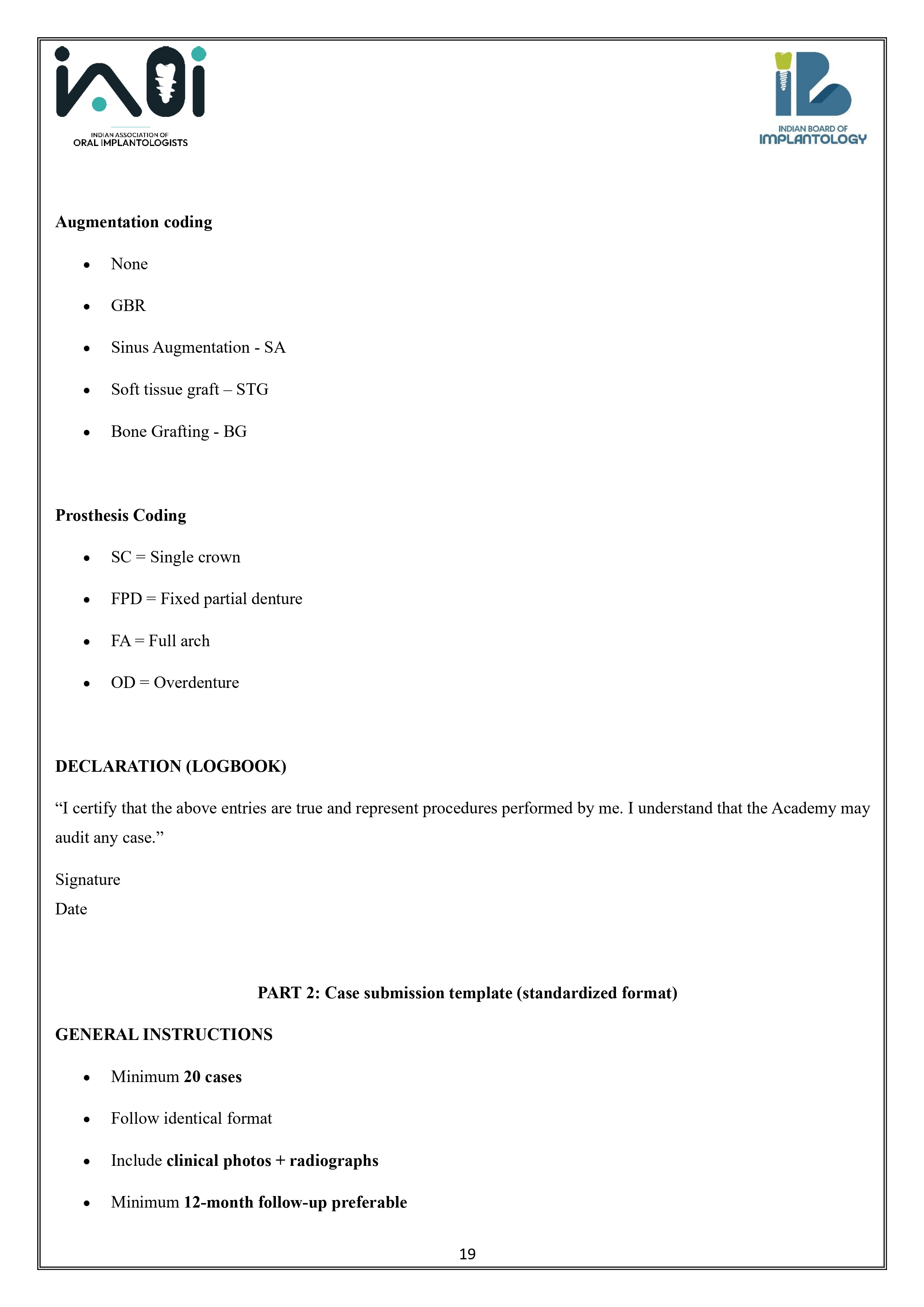
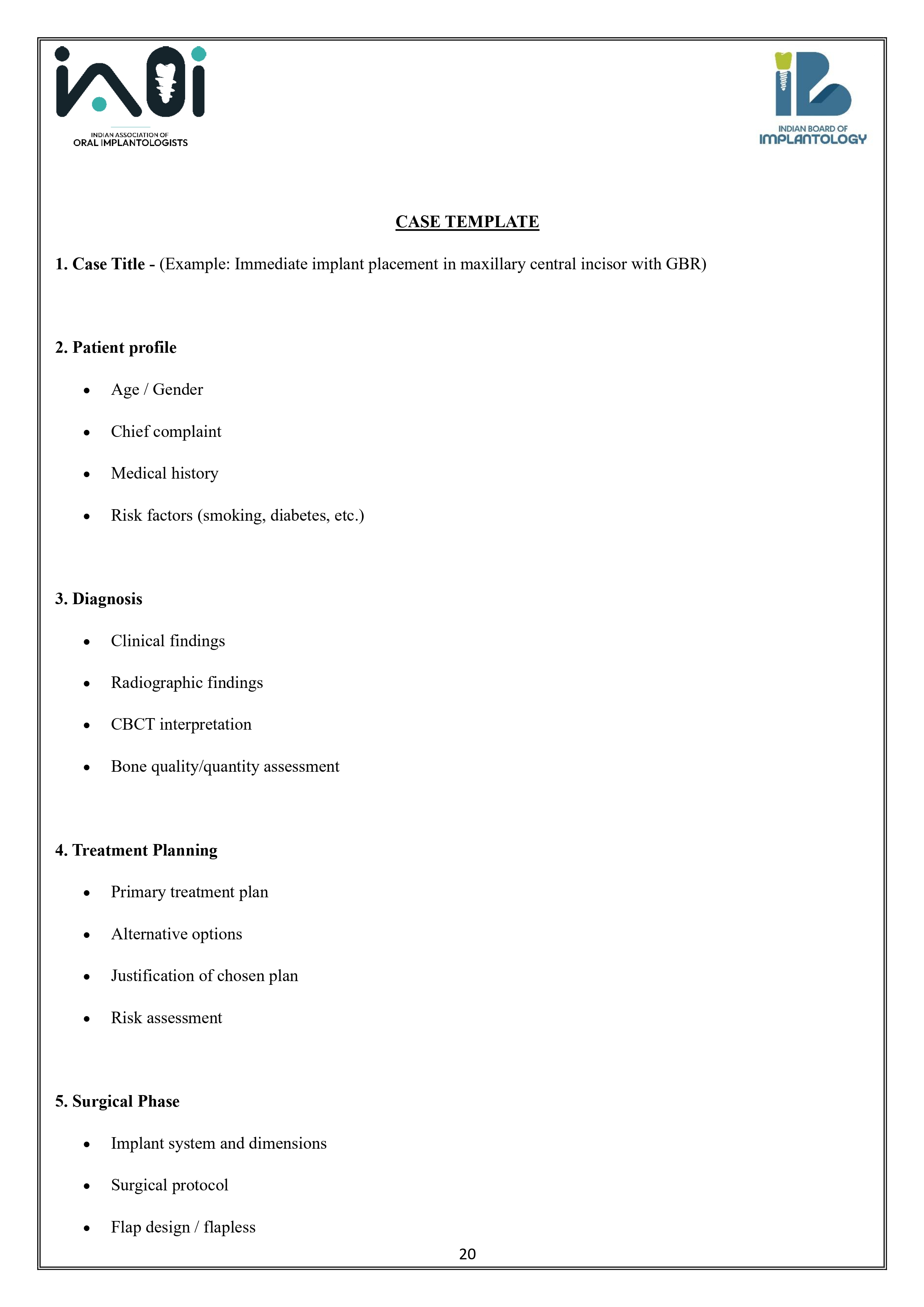
Each candidate is required to submit a comprehensive portfolio consisting of a minimum of 20 fully documented implant cases. The cases must collectively represent a broad spectrum of clinical scenarios to demonstrate the candidate’s versatility and competence.
The portfolio must include cases from specific categories, including esthetic zone implants, posterior multi-unit restorations, immediate implant placement, full arch rehabilitation, implant-supported overdentures, bone augmentation procedures, sinus augmentation, complication or failure management, digital workflow cases, and cases involving medically compromised patients.
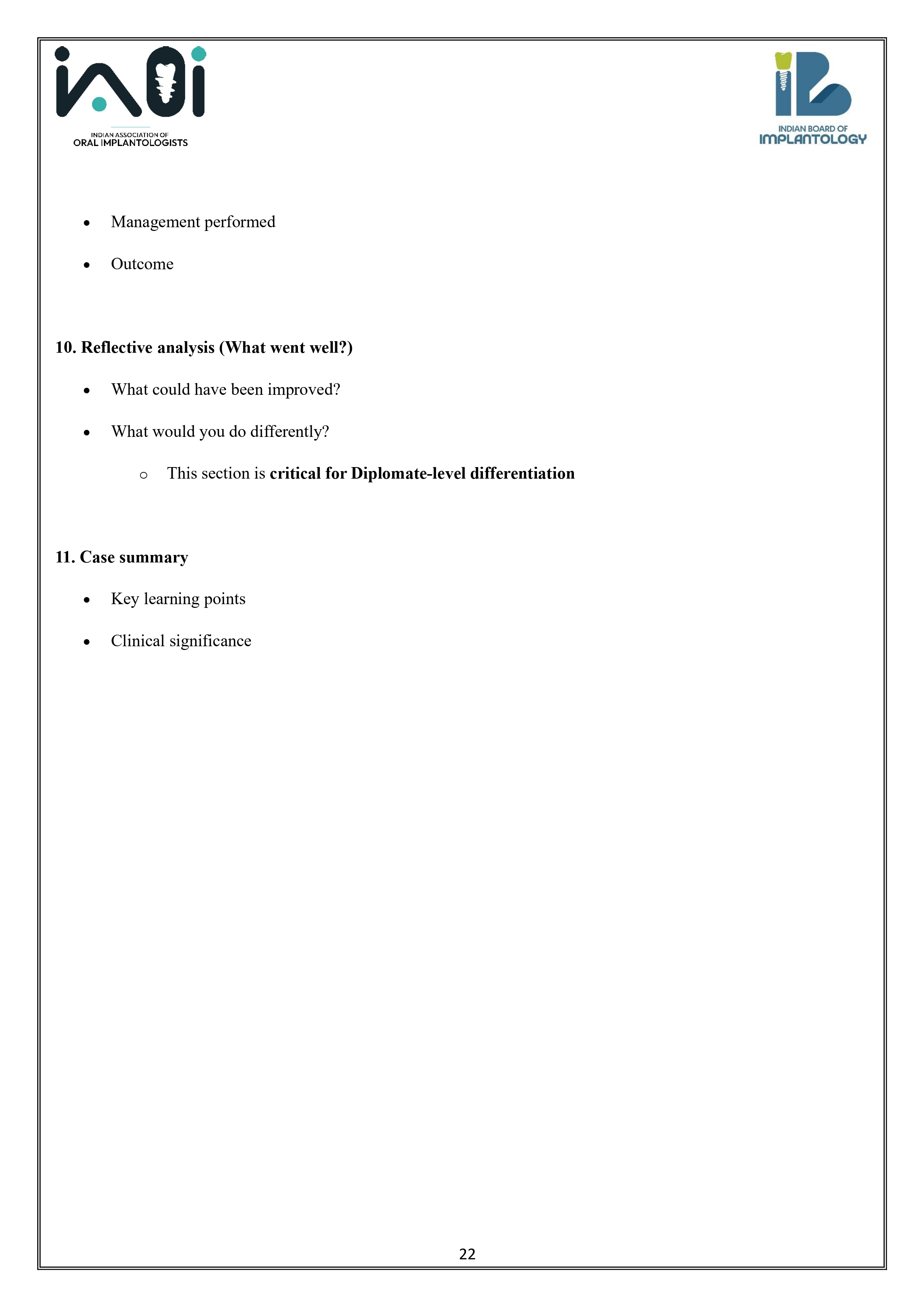
All cases must include detailed documentation of diagnosis, treatment planning, surgical and prosthetic procedures, and adequate follow-up outcomes after functional loading. A reflective analysis must be included for each case, wherein the candidate discusses clinical decisions, challenges encountered, and lessons learned.
Candidates who have completed Fellowship under the Board may include cases performed during Fellowship, provided that the candidate had a primary role in the procedures and that the cases meet all documentation and follow-up requirements. However, at least fifty percent of the submitted cases must have been performed independently after completion of Fellowship to ensure that the certification reflects independent clinical capability.
All candidates are required to adhere to the highest standards of ethical practice. Informed consent must be obtained and documented for all procedures included in the case portfolio. Candidates must provide complete and honest documentation, including the reporting of complications and adverse outcomes.
Any form of data manipulation, fabrication, or misrepresentation will result in immediate disqualification and may lead to further disciplinary action by the Academy.
The written examination consists of a comprehensive set of case-based multiple-choice questions designed to evaluate applied knowledge. The case portfolio is evaluated independently by multiple examiners using standardized scoring criteria to ensure objectivity and consistency.
The oral examination includes both the defense of submitted cases and the discussion of unseen clinical scenarios. Candidates are assessed on their ability to justify treatment decisions, anticipate complications, and propose appropriate management strategies. A candidate must achieve the minimum required standard in each component to qualify for certification.
Upon successful completion of all stages of the certification process, the candidate shall be awarded the title of Diplomate of the Indian Board of Implantology (Diplomate IBI). This title signifies advanced clinical competence and is awarded under the authority of the Indian Board of Implantology under the aegis of the Indian Association of Oral Implantology.
The certification process is administered by an independent Examination Committee constituted by the IAOI. The committee is responsible for maintaining the integrity, transparency, and consistency of the certification process.
Quality assurance measures include anonymized case evaluation, multi-examiner scoring, and periodic review of examination standards. External experts may be invited to participate in the evaluation process to enhance objectivity and maintain alignment with global best practices.
The policy shall be subject to periodic review to ensure its relevance in light of advancements in implant dentistry and evolving clinical standards. Any amendments shall require approval from the Executive committee of the Board.
The Diplomate certification of the Indian Board of Implantology is designed to establish a credible and rigorous benchmark for excellence in implant dentistry. By integrating structured assessment, comprehensive clinical evaluation, and ethical accountability, the program aims to elevate standards of practice and enhance professional credibility within India and internationally.
The inclusion of a structured progression pathway from Fellowship to Diplomate further strengthens the framework by promoting continuous professional development while preserving the distinction and prestige associated with the highest level of certification.
Operational Manual outlines the procedures, processes, and administrative framework governing the conduct of the Diplomate certification of the Indian Board of Implantology under the Indian Association of Oral Implantology. It serves as a guide for candidates, examiners, and administrative authorities to ensure uniform implementation of the certification process.
The manual is intended to ensure transparency, consistency, accountability, and adherence to the highest standards of professional evaluation.
The certification process shall be administered through a structured governance model to ensure independence and integrity.
2.1 Governing Council
The Executive Committee of the Association shall have overall authority over policy approval, amendments, and final ratification of Diplomate awards.
2.2 Examination Committee
The Examination Committee shall be responsible for:
The committee shall function independently and shall not be influenced by external or internal pressures.
2.3 Board of Examiners
The Board of Examiners shall consist of experienced clinicians with proven expertise in implant dentistry. They shall be responsible for evaluation of written exams, case portfolios, and oral examinations.
Examiners must have a minimum of ten years of experience in implant dentistry and must demonstrate continued clinical and academic involvement. Preference shall be given to candidates holding Diplomate status once the system is established. All examiners must declare any conflict of interest prior to participation. An examiner shall not evaluate a candidate who is a student, associate, or professional collaborator.
Examiners are required to undergo periodic calibration sessions to ensure consistency in scoring and interpretation of evaluation criteria.
The Diplomate certification shall be conducted once annually or as determined by the Examination Committee.
A typical certification cycle shall include:
All timelines shall be communicated in advance and adhered to strictly.
All applications shall be reviewed for completeness and eligibility. Incomplete applications or those not meeting eligibility criteria shall be rejected at the screening stage.
The implant logbook, educational credentials, and supporting documents shall be verified. The Examination Committee reserves the right to request additional documentation or clarification.
Only candidates who meet all eligibility criteria shall be permitted to appear for the written examination.
6.1 Written Examination
The written examination shall be conducted in a secure environment, either physically or through a monitored digital platform. Question papers shall be confidential and prepared from a validated question bank.
Strict measures shall be taken to prevent malpractice.
6.2 Case portfolio submission
Candidates who qualify in the written examination shall submit their case portfolios in the prescribed format within the stipulated timeline.
All submissions must be anonymized and comply with documentation standards. Cases may be randomly selected for audit.
6.3 Case evaluation
Each case shall be evaluated independently by two examiners using standardized scoring sheets. In case of significant variation in scoring, a third examiner shall be appointed.
All evaluations shall be documented and archived.
6.4 Oral examination
The oral examination shall be conducted by a panel of examiners. Candidates shall be assessed on case defense, unseen case analysis, and complication management.
The examination shall follow a structured format to ensure fairness and uniformity.
The passing standards for each component of the examination shall be determined using a structured standard-setting method approved by the Examination Committee.
Candidates must achieve the minimum qualifying score in each component independently. Failure in any component shall require reattempt of that component.
Results shall be reviewed and approved by the Examination Committee before declaration. Successful candidates shall be awarded the title of Diplomate of the Indian Board of Implantology.
Each Diplomate shall be assigned a unique certification number and shall be included in the official registry maintained by the IAOI.
Candidates who fail in any component of the examination may reattempt that component within a specified period, subject to rules defined by the Examination Committee.
Candidates may submit an appeal within 30 days of result declaration in case of procedural concerns. Appeals shall be reviewed by an independent committee. Re-evaluation of marks shall not be permitted unless a procedural error is established.
All candidates and examiners must adhere to ethical standards. Any instance of misconduct, including data fabrication or examination malpractice, shall result in disqualification. The Association reserves the right to revoke certification in cases of proven ethical violations.
All candidate and patient data shall be handled with strict confidentiality. Case submissions must be anonymized, and patient identifiers must not be disclosed. All records shall be securely stored and accessed only by authorized personnel.
The certification process shall be subject to periodic audit to ensure compliance with standards. Random verification of case submissions and logbooks may be conducted.
Feedback from candidates and examiners shall be collected and used for continuous improvement.
The Association may implement digital platforms for application, submission, and evaluation processes. Candidates must comply with prescribed formats and technical requirements.
Digital records shall be maintained for audit and reference purposes.
Candidates
Examiners
Examination committee
This manual may be revised periodically to incorporate advancements in implant dentistry and improvements in assessment methodology. All amendments shall be approved by the Executive committee of the IAOI.
The Diplomate examination is designed as a multi-dimensional competency assessment system consisting of three sequential parts. Each component evaluates a distinct but interrelated domain of clinical competence, ensuring that certification reflects not only knowledge but also real-world clinical performance and decision-making ability.
The examination process includes:
Candidates must successfully qualify in each component independently. There shall be no compensation between components, ensuring balanced competency across all domains.
2.1 Purpose
The written examination is designed to assess the candidate’s ability to apply theoretical knowledge to clinical implant scenarios. It emphasizes clinical reasoning, treatment planning, and complication anticipation, rather than recall of isolated facts.
2.2 Structure
2.3 Domain Distribution
| Domain | Weight (%) | No. of Questions |
|---|---|---|
| Implant Biology & Osseointegration | 15% | 30 |
| Surgical Implantology | 20% | 40 |
| Prosthetic Implantology | 20% | 40 |
| Occlusion & Biomechanics | 10% | 20 |
| Biomaterials & Implant Systems | 10% | 20 |
| Digital Implantology | 10% | 20 |
| Complications & Maintenance | 15% | 30 |
2.4 Cognitive level distribution
| Level | Description | Weight |
|---|---|---|
| Level 1 | Basic recall | 10% |
| Level 2 | Understanding | 30% |
| Level 3 | Application (case-based) | 40% |
| Level 4 | Analysis & decision-making | 20% |
2.5 Question design standards
Each question must:
2.6 Passing criteria
3.1 Purpose
This component evaluates real clinical competence, including diagnosis, planning, execution, outcomes, and complication management. It is the most critical differentiator of Diplomate certification.
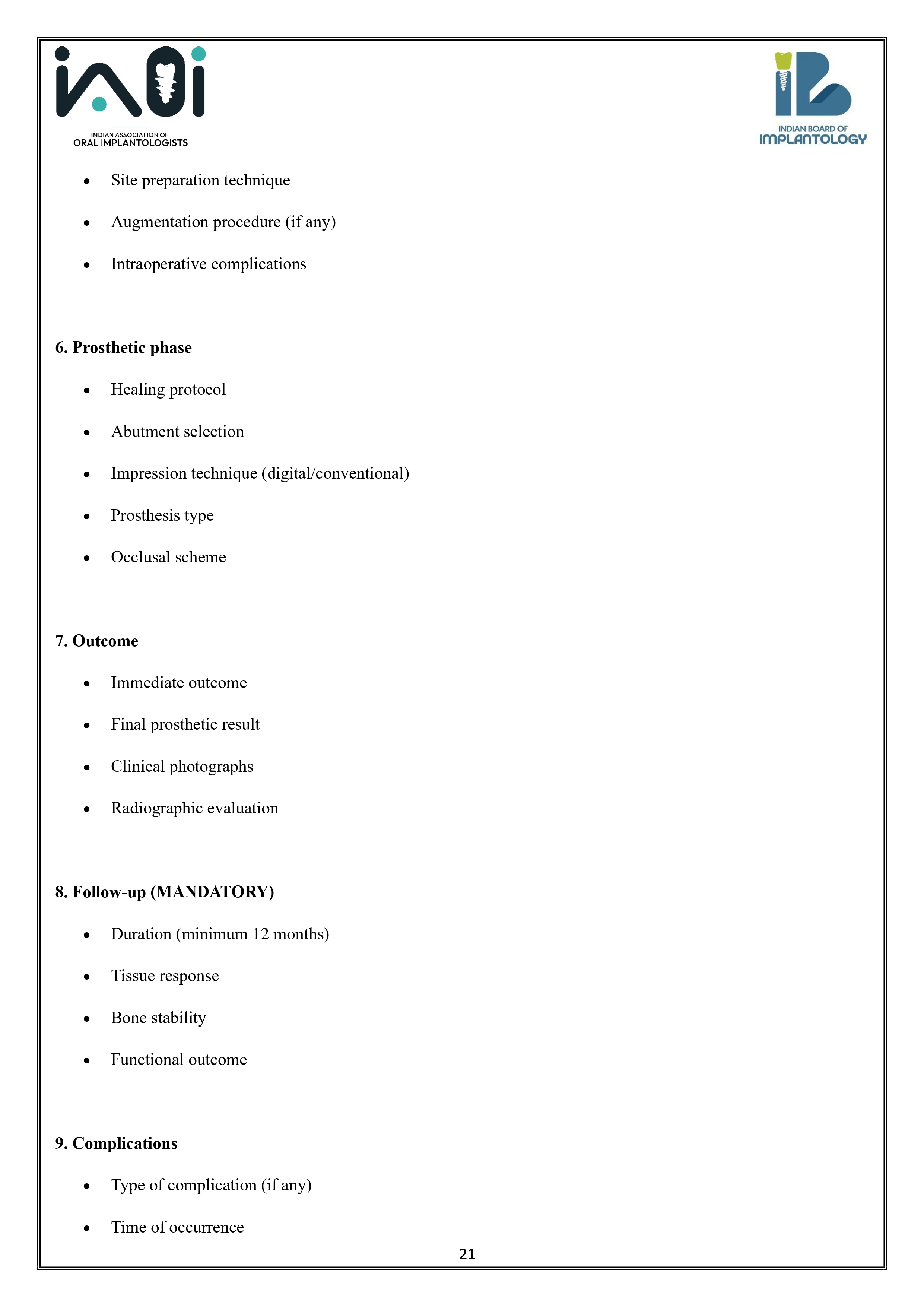
3.2 Case requirements
3.3 Evaluation method
Each case is evaluated independently by two examiners, using a standardized scoring rubric. In case of significant variation (>15%), a third examiner will review the case.
3.4 Scoring Blueprint (Per case: 100 Marks)
| Parameter | Description | Weight |
|---|---|---|
| Diagnosis & Risk Assessment | Biological, functional, and esthetic risks | 20 |
| Treatment Planning | Rationale, alternatives, sequencing | 20 |
| Surgical Execution | Technique, precision, protocol adherence | 20 |
| Prosthetic Execution | Design, occlusion, integration | 15 |
| Outcome & Follow-Up | Clinical and radiographic success | 10 |
| Complication Management | Identification and handling | 10 |
| Documentation & Presentation | Clarity, completeness | 5 |
3.5 Critical evaluation criteria
3.6 Submission format
4.1 Purpose
The oral examination assesses the candidate’s ability to defend their case portfolio and respond to unseen clinical scenarios. It evaluates analytical thinking, ethical judgment, and professional communication.
4.2 Structure
4.3 Scoring Blueprint (Total: 100 Marks)
| Component | Weight |
|---|---|
| Case Defense | 40 |
| Knowledge assessment | 40 |
| Presentation | 20 |
4.4 Assessment parameters
Examiners evaluate:
4.5 Passing criteria
To be awarded Diplomate certification, the candidate must:
Failure in any one component requires reattempt of that component only within the stipulated time frame.
The syllabus for the Diplomate examination is designed to encompass the full scope of implant dentistry as an integrated discipline combining surgical, prosthetic, biological, and technological principles. It is structured to assess not only foundational knowledge but also advanced clinical application, decision-making, and complication management. The syllabus reflects the competencies required of an independent implant practitioner capable of handling routine as well as complex clinical scenarios. It emphasizes evidence-based practice, interdisciplinary integration, and long-term treatment outcomes.
Candidates are expected to demonstrate a thorough understanding of the biological principles underlying implant dentistry. This includes the structure and function of bone, mechanisms of bone healing, and the biological basis of osseointegration. Knowledge of cellular responses, bone remodeling, and the interaction between implant surfaces and host tissues is essential.
The syllabus also includes soft tissue biology, particularly the peri-implant mucosa, vascular supply, and factors influencing soft tissue stability. Candidates must understand how systemic conditions such as diabetes, osteoporosis, and smoking affect implant success and healing dynamics.
An advanced understanding of microbiology related to peri-implant diseases, including biofilm formation and host immune response, is also required.
This section focuses on comprehensive patient evaluation and risk assessment. Candidates must be proficient in clinical examination, radiographic interpretation, and the use of advanced imaging modalities such as CBCT for three-dimensional assessment of bone.
Treatment planning should include the ability to identify anatomical limitations, assess bone quantity and quality, and evaluate esthetic and functional requirements. Candidates must be capable of formulating multiple treatment options, including alternative plans, and justifying the final choice based on clinical evidence and patient-specific factors.
Special emphasis is placed on interdisciplinary planning, including coordination with prosthodontic, periodontal, and surgical considerations. The candidate must demonstrate the ability to plan implant placement in a prosthetically driven manner.
The syllabus includes all aspects of surgical implant placement, ranging from basic to advanced procedures. Candidates must understand principles of asepsis, flap design, and surgical protocols for implant site preparation.
Topics include immediate versus delayed implant placement, flapless surgery, guided implant placement, and management of extraction sockets. Advanced surgical procedures such as ridge augmentation, guided bone regeneration, sinus augmentation (both crestal and lateral approaches), and soft tissue grafting are integral components.
Candidates must also be familiar with anatomical considerations, including nerve positioning, sinus anatomy, and vascular structures, and should be able to prevent and manage intraoperative complications such as nerve injury, sinus perforation, and hemorrhage.
This section addresses the restoration of implants and the integration of prosthetic principles with surgical outcomes. Candidates must understand abutment selection, impression techniques (conventional and digital), and prosthesis design for single units, fixed partial dentures, and full-arch rehabilitations.
Occlusion in implant dentistry is a critical component, and candidates must be able to design occlusal schemes that minimize biomechanical complications. Knowledge of screw-retained versus cement-retained prostheses, passive fit, and prosthetic material selection is essential.
Advanced concepts such as immediate loading protocols, hybrid prostheses, and implant overdentures must be understood in terms of both design and clinical execution.
Candidates are expected to have a detailed understanding of occlusal principles specific to implant-supported restorations. This includes load distribution, force vectors, cantilever considerations, and the impact of occlusion on implant success.
The syllabus covers implant biomechanics, including stress distribution in bone, implant design considerations, and factors influencing primary and secondary stability.
Candidates must be able to apply these principles in clinical decision-making to prevent mechanical and biological complications.
This section includes the study of materials used in implant dentistry, including titanium and its alloys, zirconia implants, and surface modifications that influence osseointegration. Candidates must understand the properties, advantages, and limitations of different implant systems and prosthetic components.
Knowledge of bone graft materials, including autografts, allografts, xenografts, and alloplasts is essential. Candidates should be able to select appropriate materials based on clinical indications and understand their biological behavior and integration.
Digital dentistry forms an essential part of modern implant practice, and candidates must be proficient in digital workflows. This includes CBCT-based planning, virtual implant placement, and the use of surgical guides.
The syllabus also includes CAD-CAM technologies for prosthetic fabrication, digital impressions, and integration of digital tools into clinical practice. Candidates should understand the advantages, limitations, and potential sources of error in digital workflows.
A critical component of the syllabus is the identification, prevention, and management of complications in implant dentistry. Candidates must be able to recognize early and late implant failures, peri-implant mucositis, and peri-implantitis.
The syllabus includes surgical complications such as nerve injury, sinus complications, and infection, as well as prosthetic complications including screw loosening, fracture, and loss of retention. Candidates must demonstrate the ability to manage these complications effectively and make decisions regarding implant salvage or removal.
Risk assessment and patient selection are emphasized to minimize complications and improve long-term outcomes.
Candidates must understand the importance of maintenance protocols for implant-supported restorations. This includes recall schedules, professional cleaning techniques, and patient education.
The syllabus covers monitoring of peri-implant tissues, early detection of disease, and interventions to maintain long-term implant success. Candidates should be able to design individualized maintenance plans based on patient risk factors.
Candidates must be able to assess and manage patients with systemic conditions that may affect implant treatment. This includes diabetes, cardiovascular diseases, osteoporosis, and patients on medications such as bisphosphonates or anticoagulants. The syllabus emphasizes risk modification, treatment planning adjustments, and interdisciplinary coordination with medical professionals.
This section includes ethical principles in implant dentistry, including informed consent, patient communication, and management of expectations. Candidates must understand medico-legal responsibilities, documentation standards, and professional accountability. The importance of honest reporting of outcomes, including complications and failures, is emphasized as part of ethical clinical practice.
Candidates must be able to critically evaluate scientific literature and apply evidence to clinical practice. This includes understanding study designs, levels of evidence, and the interpretation of systematic reviews and clinical trials.
The syllabus encourages integration of current research with clinical expertise to ensure optimal patient outcomes.
Implant dentistry often requires collaboration with other dental and medical specialties. Candidates must understand the role of interdisciplinary care, including coordination with prosthodontists, periodontists, oral surgeons, orthodontists, and oncologists when required.
A unique component of the Diplomate syllabus is the emphasis on reflective practice. Candidates are expected to critically analyze their own clinical work, identify areas for improvement, and demonstrate continuous learning.
Clinical judgment, adaptability, and the ability to handle complex and evolving situations are considered essential attributes of a Diplomate.
Please provide all necessary details and documents for your diplomate application.
0%
Uploading large files... Please do not close this window. This may take a few minutes.
DIRECTOR
Dr. Sabarinathan
+91 97911 34754
CONVENOR
Dr. Johnson Raja James
+91 99438 69393
SECRETARY
Dr. Sreelekshmi Midhun
+91 96770 78779